

Chetvik Sharma
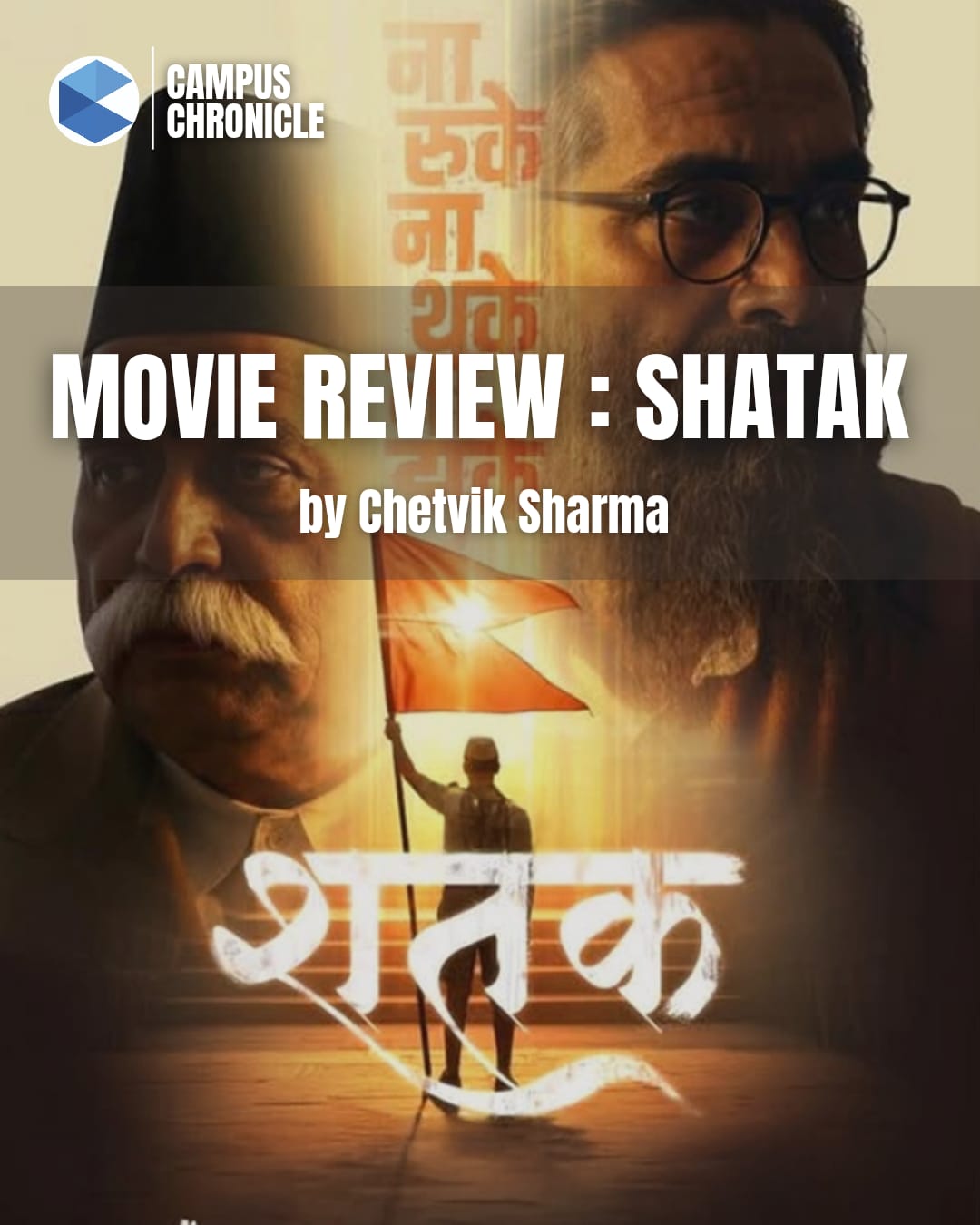
Directed by Aashish Mall and produced by Vir Kapoor – Shatak, documents the hidden in plain view history of Rashtriya Swayamsewak Sangh, that is observing its centenary year. Filmmakers have used AI rather than real actors in movie – which somehow have negatively impacted the visuals but still it can be seen as a good attempt in making way for AI based films for big screens. The movie takes viewers back in time to the colonial period when India was in shackles of British Imperialism and society itself was very fragmented because of social evils and dogmas.
Movie tries to highlight the pre-conditions of emergence of RSS through a vivid portrayal of life of Keshav Baliram Hedgewar – who is shown as a born-patriot with a solid record of being engaged in nationalist activities since his school days. The film also sheds light on Keshav’s journey as a freedom fighter engaged in underground as well as mainstream activities – whether it be Anushilan Samiti or Indian National Congress.
It should be acknowledged that movie highlights interactions of Dr. Hedgewar with pillars of diverse strands of Indian nationalism – whether it be Lokmanya Tilak or Gandhiji or Veer Savarkar or Mahamana Madan Mohan Malviya – a thing which has been earlier hidden from masses. The foundation of RSS’s principle of “Nation Building through Character Building” is beautifully explained. Movie not only focuses on emergence of RSS under Dr. Hedgewar but also gives emphasis to the process of expansion and consolidation under Guruji Madhav Sadashivrao Golwalkar – who handled the duty as Sarsanghachalak of RSS after Dr.Hedgewar. Guruji’s period itself is very important because it saw the peak time of Indian national struggle, the horrors of partition, Murder of Mahatma Gandhi, Accession of princely states, First ban of RSS, and a series of wars with Pakistan and China.
The movie has very efficiently shown the history of RSS during this crucial period of constant chaos. The highlights the history of courage, sewa, and dedication – an important part of swayamsewak’s character. Filmmakers also tried to highlight very less known history of role of RSS in accession of Kashmir in India as well as in liberation of Goa and Dadar-Nagar Haveli. Though movie does not covers much content from time after death of Guruji but it tries to give a little screentime to the period of emergency – The dark years for Indian Democracy, and the saga of people/sangh vs the emergency.
Filmmakers have carefully utilized the available literature on history of RSS, placing the story in a historically justifiable position. The movie is a must-watch for those who are curious about RSS and for those who want to explore a prominent but hidden from plain sight strand of Indian patriotism.


